

Asian semiconductors enter the second half of 2026 as the clear engine of the region's equity performance, yet the surface narrative of an undifferentiated "AI boom" obscures a sharper story: the profit pool is concentrating in a handful of memory and foundry leaders, while an export-control regime in Washington and a self-sufficiency drive in Beijing are quietly redrawing who can build and buy advanced compute 1. Close to 30% of global AI capital expenditure is now landing in Taiwan and South Korea, tying two national indices to a single theme 4. For investors, the actionable read is no longer that demand is strong — that is priced — but where the scarcity, the pricing power, and the political risk actually sit.
The Memory Chokepoint Where Pricing Power Sits
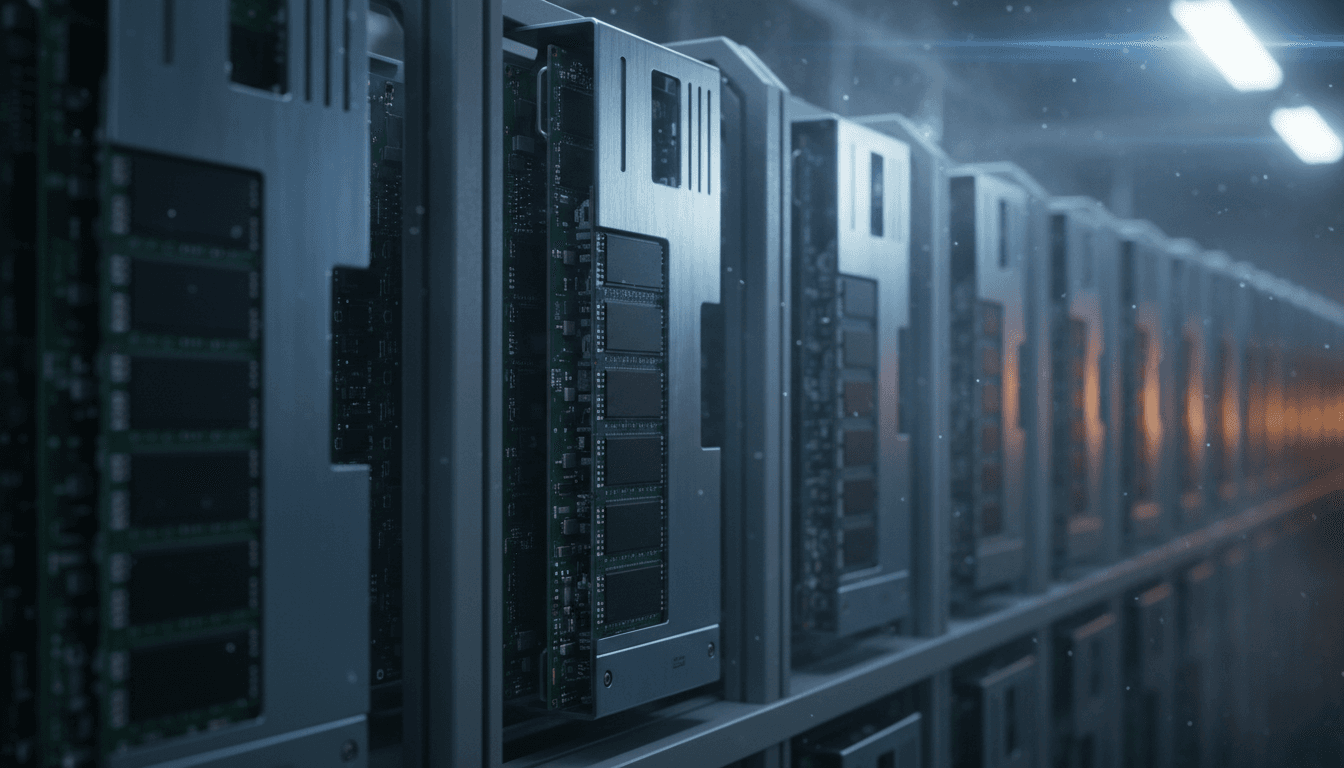
High-bandwidth memory (HBM) has become the industry's true bottleneck, and with it its clearest pricing power. SK Hynix's chief financial officer has confirmed the company already sold out its entire 2026 HBM supply, and the wider HBM market is projected to expand from roughly $35 billion in 2025 toward about $100 billion by 2028 11. Pricing reflects the scarcity: HBM4 is estimated at around $500 per 48GB stack — more than 50% above HBM3E 12-high pricing in the mid-$300 range — while Samsung and SK Hynix are reported to have pushed through roughly 20% HBM3E price increases for 2026 as NVIDIA H200 and custom-ASIC demand rose 5 6. The spoils are split unevenly: SK Hynix holds an estimated 50–55% of the HBM market to Samsung's 35–40% and Micron's 5–10%, and UBS expects SK Hynix to capture close to 70% of HBM4 supply for NVIDIA's next-generation Rubin platform 5. With HBM3E still around two-thirds of 2026 shipments as 16-layer HBM4 ramps, a historically cyclical product being sold out two years forward marks a structural inversion of bargaining power toward the memory makers 5.
The Foundry Duopoly and a Consensus Wobble
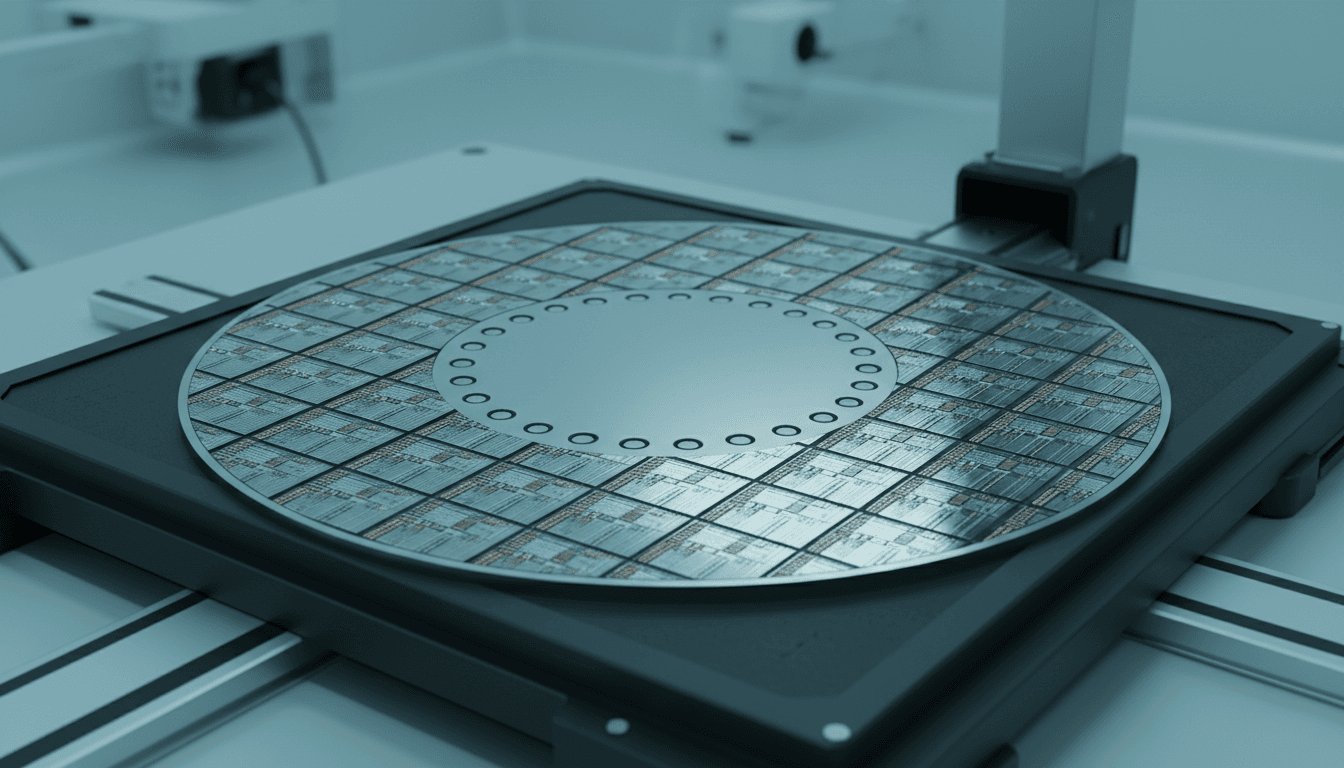
On the logic side, concentration is even more acute. TSMC held roughly 72% of the global foundry market in the first quarter of 2026, carries a market value near $2.3 trillion, and trades up more than 50% on the year on AI-accelerator demand 1. That very dominance is now drawing caution: on July 1, Goldman Sachs removed TSMC from its Asia-Pacific Conviction List — not a call against the business, but a signal that the sector's anchor is priced for perfection and that Taiwanese and Korean indices are dangerously levered to one narrative 1 2. Samsung Electronics embodies the high-stakes response, committing more than $73 billion to semiconductors in 2026 — the industry's largest single-year outlay — to ramp HBM4, advance its SF2 and SF4 process nodes, and bring its Texas fab toward risk production later this year 3. Whether that capital narrows the gap with TSMC or merely defends Samsung's memory lead is the single biggest swing factor for the duopoly's structure.
China's Race for Self-Sufficiency, and Its Missing Piece
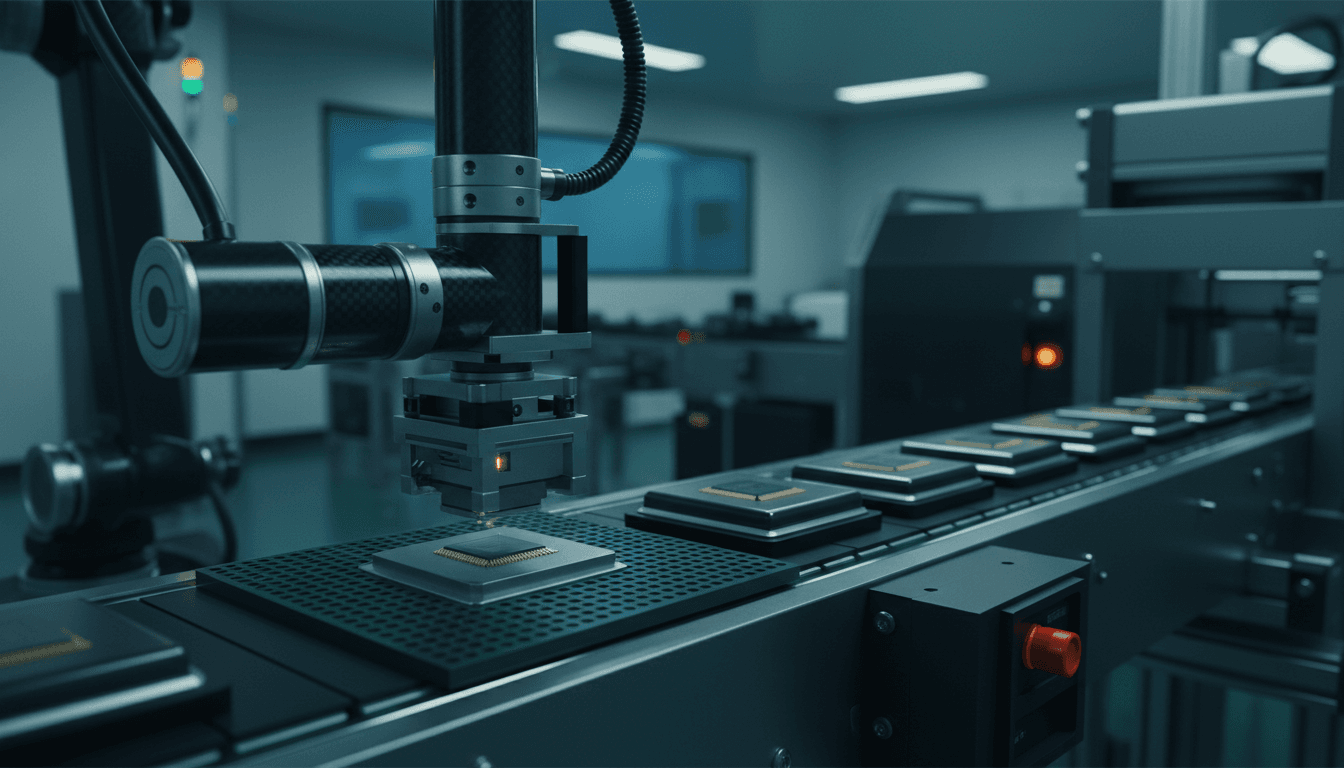
Beijing's answer to exclusion from leading-edge Western supply is scale and speed. Huawei plans to roughly double output of its Ascend AI accelerators in 2026 — as many as 1.6 million dies, including around 600,000 Ascend 910C units and an ambitious 750,000 of the newer Ascend 950PR, fabricated on partner SMIC's N+3, a 5nm-class node 7. SMIC's advanced-node capacity is projected to climb from roughly 45,000 wafers per month at the end of 2025 to 60,000 in 2026 and 80,000 by 2027, with a planned doubling of 7nm capacity 7. Yet the strategy hits the same chokepoint that rewards Korea: each Ascend package requires HBM stacks that Chinese memory producers cannot yet manufacture at the necessary complexity, capping finished output no matter how many compute dies SMIC fabricates 7. A domestic-compute mandate steering more AI workloads onto local hardware lifts demand 11, but the memory bottleneck leaves self-sufficiency, for now, an aspiration bounded by a single component.
Allies Pulled Into the Control Regime
The policy layer is tightening around all of it. US export rules on advanced AI chips were codified in January 2026, shifting license reviews for the most sensitive China-bound parts toward case-by-case assessment; by June, Washington clarified the restrictions reach Chinese firms operating outside China, widening rather than loosening the net 8. Allies are being pulled in: Japan has listed 23 chip technologies requiring export licenses to 160 countries, following the United States and the Netherlands, while a US House bill introduced in April 2026 presses allies to align controls squarely at lithography and equipment leaders including ASML, Nikon, and Canon 10. At the same time Tokyo is subsidizing Rapidus's 2nm gate-all-around fab in Hokkaido — a prototype was confirmed in mid-2025, with mass production targeted for 2027 — tying government money to ASML tooling and a domestic leading-edge ambition of its own 9. The map of who supplies whom is being redrawn by policy as much as by technology.
Forward-Looking Outlook
The investable conclusion is that the AI cycle rewards a strikingly narrow set of Asian names while the ground beneath them shifts. Three signals will matter more than the next capex headline. First, HBM pricing and whether 2027 supply is already being committed — the clearest live gauge of memory-maker pricing power 5 11. Second, Samsung's execution on SF2 and its Texas fab, which decides whether the foundry structure stays a monopoly-in-practice or tightens into a genuine duopoly 3. Third, the pace at which China clears its HBM bottleneck, since that single component gates how quickly a parallel, self-sufficient supply stack can harden 7. In a sector this concentrated and this politicized, the divergence — not the aggregate demand — is where the next repricing will originate.
- [1]TSMC, Samsung, SK Hynix's growth on Taiwan and South Korean markets — CNBC, 2026-05-12
- [2]Goldman Sachs turns its back on major semiconductor stock — TheStreet, 2026-07-01
- [3]Samsung Electronics vs TSMC Stock 2026 — International Business Times, 2026
- [4]2026 Asia Outlook — J.P. Morgan Private Bank, 2026
- [5]SK Hynix and Samsung: HBM4 Readiness and the 2026 Capacity Race — Silicon Analysts, 2026
- [6]Samsung, SK hynix Reportedly Plan ~20% HBM3E Price Hike for 2026 — TrendForce, 2025-12-24
- [7]China's chip champions ramp up production of AI accelerators — Tom's Hardware, 2026
- [8]US says ban on AI chip shipments applies to Chinese firms outside China — Al Jazeera, 2026-06-01
- [9]Japan Rapidus Subsidies Tie ASML Tools To AI Chip Ambitions — Yahoo Finance, 2026
- [10]Japan and the Netherlands Announce Plans for New Export Controls on Semiconductor Equipment — CSIS, 2026
- [11]AI Chips News Today: Export Rules and 2026 Supply — EBC Financial Group, 2026



 View certificate